Father and Son Embroidery Design Review
As a designer who has spent years refining embroidery files for both personal gifts and commercial product lines, I approach every new digital asset with a mix of excitement and skepticism. The market is flooded with generic silhouettes, but there is something specific about the Father and Son Embroidery Design that caught my eye immediately. It isn't just another clipart image; it feels like a narrative waiting to be stitched. When I first loaded this file into my digitizing software, the mood it set was instant: warm, protective, and deeply sentimental. This is exactly the kind of embroidery design that elevates a simple tote bag or baby onesie into a cherished keepsake.
First Impressions and Visual Personality
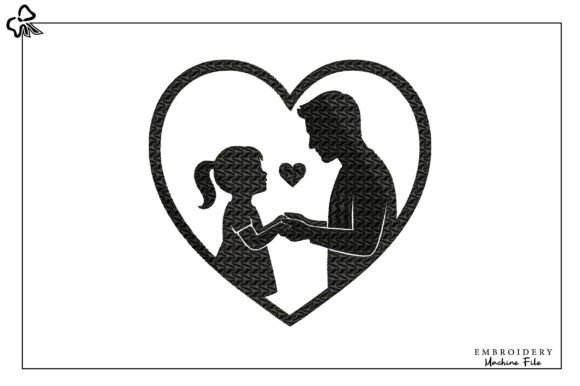
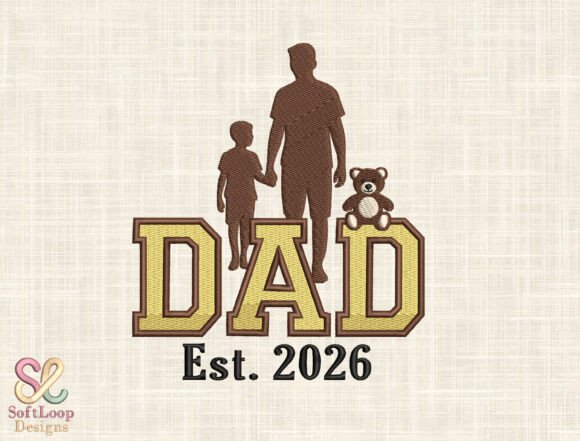
The core strength of this piece lies in its silhouette composition. Unlike busy designs that rely on intricate facial features or complex shading, this Father and Son Embroidery Design uses clean, bold shapes to convey emotion. The depiction of a father holding a child creates an immediate focal point that works beautifully across various mediums. For a small business owner looking to create high-margin items, this simplicity is gold. It ensures that the stitching remains crisp even when scaled down, which is a common pitfall in many machine embroidery designs.
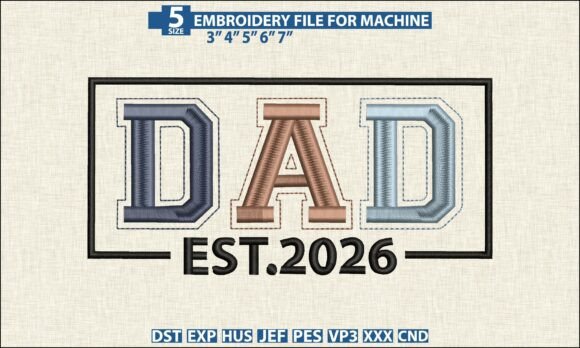
The inclusion of the text "Dad Est. 2026" adds a modern, personalized touch that resonates strongly with current trends in custom apparel. It transforms a standard graphic into a milestone marker. Visually, the layout balances the human figures with the typography so that neither element fights for attention. This balance suggests that the designer understood how thread density interacts with fabric texture. It feels less like a stock vector and more like a hand-drawn sketch translated into stitches.
Real-World Application: From Screen to Stitch
To truly judge an embroidery file, you have to imagine it on a physical object. Let me walk you through a scenario I recently considered for a boutique client. Imagine creating a line of organic cotton aprons for a Father's Day collection. This Father and Son Embroidery Design would sit perfectly on the chest pocket area. The silhouette is compact enough to fit without overwhelming the garment, yet detailed enough to be seen clearly from a distance.
However, the versatility extends far beyond kitchen wear. I envision this design thriving on sweatshirts and hoodies, where the soft fleece background allows the satin stitch elements to pop. For a baby item, such as a muslin blanket or a nursery pillow cover, the gentle curves of the father and son figures offer a tender aesthetic that parents love. If you are an Etsy seller looking to expand your catalog, this design fits seamlessly into categories like baby embroidery or holiday embroidery. It bridges the gap between a casual gift and a premium keepsake.
Consider also the potential for embroidered patches. The clean edges of the silhouette make it ideal for a detachable patch that can be applied to denim jackets or backpacks. In these applications, the design acts as a badge of honor, signaling family pride in a subtle yet powerful way. The visual appeal directly impacts customer trust; a well-executed stitch job on a durable material signals quality, encouraging buyers to pay a premium for your handmade product.
Navigating Technical Challenges and Limitations
While the artistic vision is strong, any experienced crafter knows that execution is everything. There are specific scenarios where this Father and Son Embroidery Design requires careful consideration. First, let's talk about fabric texture. On highly textured materials like heavy boucle or loose-weave linen, the fine details of the hold might get lost. The thread could snag or fail to lay flat, disrupting the smooth flow of the silhouette. In these cases, a stabilizer choice becomes critical, and you might need to adjust the stitch density to accommodate the fabric's irregularities.
Stretchy fabrics present another hurdle. If you are planning to use this on a jersey knit t-shirt or a stretchy cap, the tension of the embroidery threads can cause the fabric to pucker around the design. The text "Dad Est. 2026" needs to remain legible, so using a stabilizer that provides firm backing is non-negotiable. Additionally, if you are working with dark fabric, the contrast of the thread colors will determine the success of the project. A light-colored thread on black fabric might look stunning, but if the thread count is too low, the coverage could appear patchy.
Small hoop sizes are another area to watch. While the design is relatively compact, attempting to stitch it on a very small hoop (like those used for socks or tiny accessories) might force the machine to compress the spacing, resulting in a muddy appearance. Similarly, dense stitch areas in the center of the hold could create a stiff spot on a garment that needs to drape softly. Always inspect the design assets for potential trouble spots before committing to a full production run.
Practical Designer Notes for Success
Before you rush to print mockups or start selling, there are essential steps to ensure your finished product looks professional. My golden rule is always to test the digital embroidery file on scrap fabric first. This allows you to see how the thread colors interact with your specific substrate and whether the hoop size accommodates the design without cutting off edges. You should also review the stitch types—specifically how the satin stitch handles the outlines and how the fill stitch covers the body of the figures. Sometimes, adjusting the direction of the fill stitch can dramatically improve the final look.
For those of you selling on platforms like Etsy or running a craft fair booth, presentation matters. Create printable mockups that show the design on different backgrounds to gauge its versatility. Does it look good on a white shirt? How does it perform on a navy blue tote bag? Testing the design in black and white can help you identify if the contrast levels are sufficient for all colorways. Furthermore, confirm whether the license allows for commercial use if you plan to sell finished items. Many designers overlook this, leading to legal headaches later.
When preparing for commercial embroidery projects, consistency is key. Ensure that every unit produced matches the quality of your prototype. If the design is intended for frequent washing, check that the stitch density is robust enough to withstand friction without unraveling. For personalized gifts, take the time to verify that the year "2026" is clear and centered, as this is often the most scrutinized part of the design by the recipient.
Final Verdict on Visual Impact
In conclusion, the Father and Son Embroidery Design stands out as a versatile and emotionally resonant asset for any creative entrepreneur. It strikes a rare balance between simplicity and sentimentality, making it suitable for everything from a quick custom gift to a high-end boutique collection. By understanding its strengths and respecting its technical limitations, you can transform this digital file into a tangible masterpiece. Whether you are decorating a tote bag design, crafting a sweatshirt embroidery piece, or creating a special patch, this design offers a solid foundation for building brand loyalty and customer engagement. It is a reminder that great embroidery is not just about the machine; it is about the story you tell through thread.